




2025/11/03 12:58 pm
Following the successful globalization of its Fintech Infrastructure and Unified Payment Interface, India is poised to make another milestone with global biofuel diplomacy.
India's biofuel diplomacy, launched as a strategic move to reduce reliance on oil imports while promoting rural development and strengthening climate commitments, is emerging as a powerful pillar of its global economic strategy, bolstered by initiatives such as the Ethanol Blending Program and the formation of the Global Biofuels Alliance. What began as a local energy program evolved into an export platform, and the country is today recognized as a reliable clean-energy partner around the world.
India's Discovery and Early Adoption of Biofuels
Biofuel production began as a solution to the challenge of reducing crude oil imports, enhancing energy security and efficiency, and boosting rural economies.
In the early 2000s, India employed ethanol as a fuel, beginning with a pilot program in 2001 to blend ethanol into petrol. Initially, ethanol was created as a byproduct of the sugarcane production process. Later, in January 2003, the government launched the Ethanol Blended Petrol (EBP) Programme to promote the supply of 5% ethanol-blended gasoline, with the goal of reducing reliance on oil imports and increasing cleaner energy use.
Despite early beginnings, significant success has only been seen in the formative years of cooperation between agricultural institutions, government research centers, and industrial entities, which gained momentum after 2014.
Major Milestones and Achievements
India’s ethanol blending policy has had a transformative impact:
Driving the global export winds: From Fintech to Farmtech
Just as UPI transformed India into a trusted tech exporter, India’s Global Biofuels Alliance (GBA), launched during its G20 Presidency, sets a blueprint for international cooperation in clean energy:
India’s Biofuel Export Vision
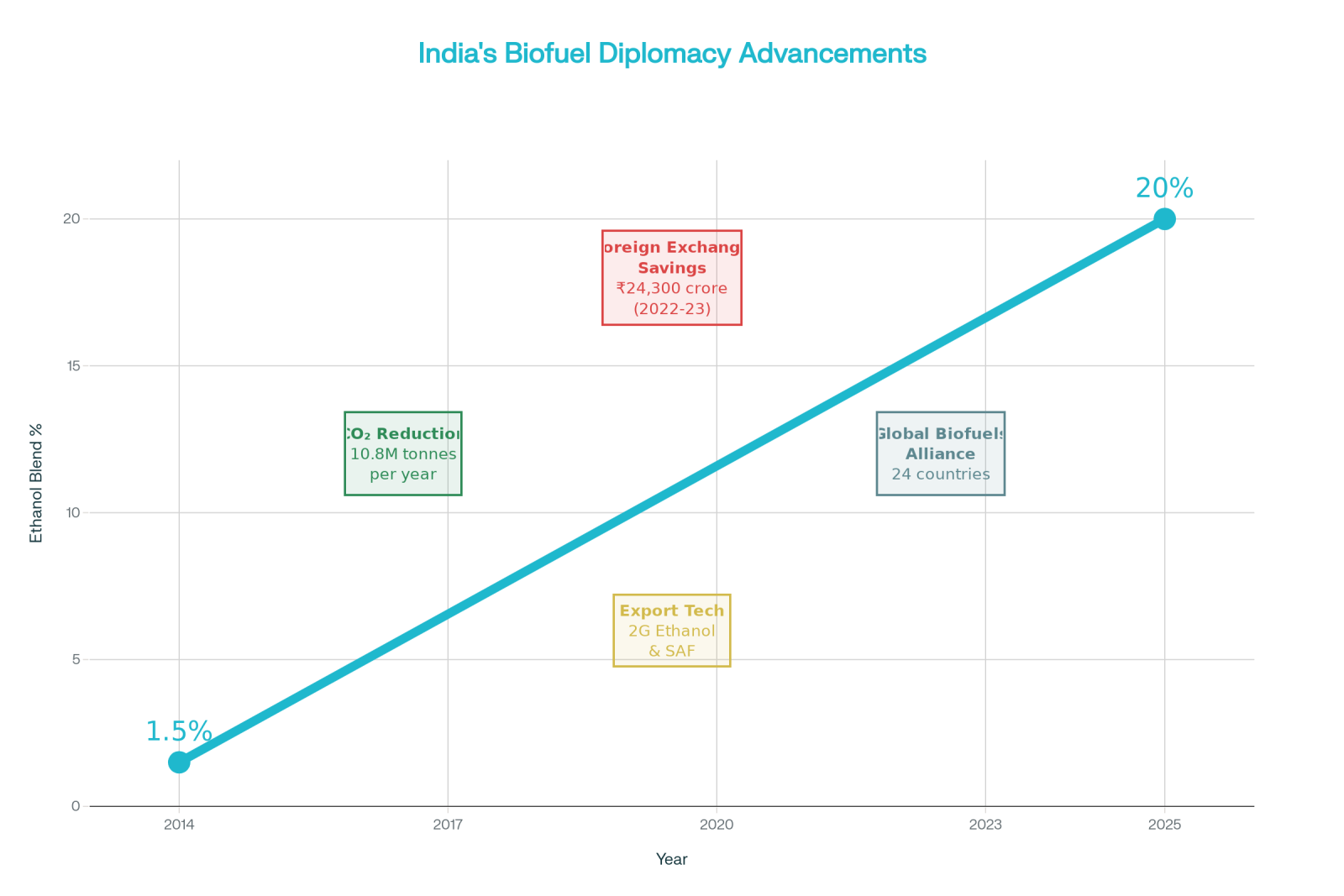
India is following in the footsteps of countries such as the United States and Brazil, but with a greater emphasis on inclusion and sustainability above rivalry. Brazil originally sold ethanol know-how to Latin America and Africa, but the United States now ships two billion gallons of ethanol to 80 countries annually.
India plans to export surplus ethanol and sophisticated biofuel technologies like Second Generation (2G) and Sustainable Aviation Fuel (SAF).
Platforms Boosting Biofuel Diplomacy
Events like the Global Fintech Festival 2025, which highlighted India’s fintech prowess, are mirrored in the upcoming SEIC 2026 (Sugar, Ethanol & Bioenergy India Conference). The SEIC event will convene global leaders to promote international biofuel trade, investment, and cooperation.
Participants include:
Key Challenges and Roadblocks
The Road Ahead
India’s diplomatic pitch places biofuels not as a competitive product, but as a collaborative platform for cleaner development — where all can win. The government has set ambitious blending targets, invested in R&D for advanced biofuels, and strengthened international collaborations.
Just as UPI has made digital payment infrastructures a globally trusted standard, India’s efforts in biofuel diplomacy promise to make clean, green energy a flagship export — advancing climate goals, rural prosperity, and international influence in tandem.